
In 1997, Walmart entered Germany with one of the most successful retail models in the world. Low prices, operational efficiency and a customer experience built around scale. Walmart had the resources, the reputation and a formula that had already reshaped retail across America. By 2006, the company had sold its German operations and left the country.
Germany already had a deeply competitive discount retail market. Aldi and Lidl occupied the exact territory Walmart intended to claim. The low-price proposition that distinguished Walmart at home was the baseline in Germany, where every serious retailer already competed on cost. Some of Walmart’s American service conventions, including enthusiastic greetings and bagging at checkout, felt unfamiliar to German shoppers. Regulations around labour and store operations also created friction the company had not planned for.
Walmart’s model was extraordinarily successful in the environment that shaped it. The more revealing question is what happened when that environment changed. What made the brand work in one place, and how much of that success could actually travel?
The Replication Instinct
When a brand finds something that works, the instinct is to replicate it. The campaign gets reused, the visual identity stays the same, the product launches in the same format. Sometimes that works.
But the success of a brand expansion is usually the product of several things working together: the offering, the customer need, the competitive landscape, the distribution model, the pricing, the cultural context and the way the brand communicates value. Change the environment and the relationship between those elements shifts. Sometimes enough to undo the advantage entirely.
Market expansion therefore requires understanding why a strategy worked in the first place, then testing whether those conditions exist in the new market. If a brand’s advantage comes from convenience, what does convenience mean to customers in Lagos versus London? If it comes from premium positioning, what signals of quality and status does the brand now need to earn from its audience? The promise may remain the same. The way that promise becomes valuable may differ completely.
What should cross the border?
A brand needs a core that remains recognisable wherever it operates. Its purpose, promise and values should be consistent. Quality standards matter. If a brand is built around reliability or premium service, customers should encounter that standard regardless of geography. The name, identity and design codes carry recognition. They allow customers to find the brand even when the surrounding experience has been adapted.
What changes is expression. Language is the obvious starting point, but only the starting point. Humour, imagery, storytelling, the way a brand demonstrates value in practice: all of these can require reinterpretation. Pricing often requires a different approach because income levels, distribution costs and payment habits affect how customers understand what something is worth, and what feels warm and engaging to one audience may feel intrusive to another.
These are decisions that affect how a brand operates, hires and structures partnerships. The most effective localisation is built into strategy from the beginning, before the campaign is even briefed.
How this works in practice
When the Nigerian Bottling Company launched Plazma into Nigeria’s snacking category in October 2025, it marked a significant brand expansion beyond the company’s beverage heritage. Plazma is a well-established biscuit brand in European markets with decades of consumer familiarity. In Nigeria, it had none. No recognition, no emotional connection, and no place in the consumer’s snacking landscape.
The challenge was introducing an international brand into a category where local and regional competitors already had deep consumer relationships, established distribution and cultural familiarity. A launch built around European heritage and credentials alone would have spoken to the wrong audience in the wrong register.
In collaboration with Carpe Diem, the launch was designed to position Plazma as a meaningful moment rather than just another product on the shelf. The approach worked on two levels simultaneously. Internally, an unveiling at NBC’s offices connected employees to the significance of the brand’s entry, building organisational pride that shapes how a product is sold, stocked and spoken about at every level of the business. Externally, the Managing Director’s symbolic first retail sale created a moment that was both corporate and human, connecting the credibility of a multinational parent company to the everyday act of a consumer reaching for something new.
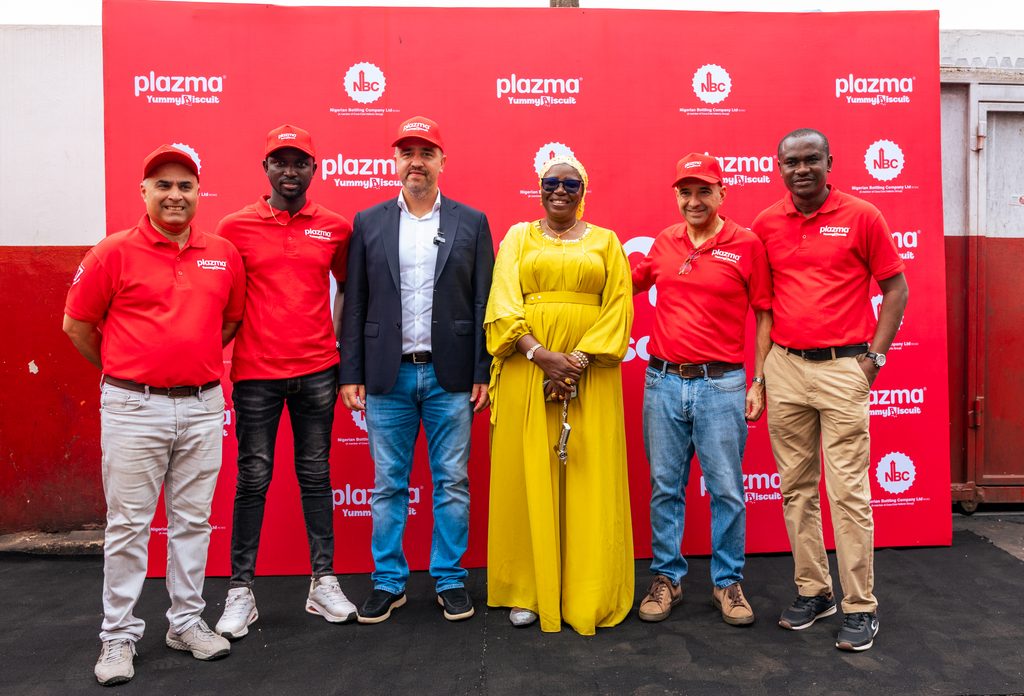
The media strategy reflected a deliberate understanding of how different Nigerian audiences consume information and form opinions about new brands. Business and financial outlets like Nairametrics and BusinessDay framed the launch as a strategic corporate expansion. Lifestyle and culture platforms like BellaNaija, Pulse Nigeria and Zikoko introduced the brand to younger, digitally engaged consumers through editorial-led content. Broadcast coverage across television and radio, including Yoruba-language programming on Bond FM, extended reach into audiences that digital campaigns consistently miss.
Which media platforms carry credibility in Nigeria versus which simply have reach, how to balance corporate reputation with consumer excitement, where grassroots visibility still matters and which language it needs to speak. These are things a global playbook cannot prescribe. They require local intelligence built into strategy, applied before the first press release is drafted. The result was national visibility, strong positive sentiment, and a market entry that positioned Plazma as both aspirational and accessible. The brand arrived with credibility from above and relevance from below.
Local intelligence shapes the brand
Cultural intelligence too often is treated as a communications consideration in brand expansion, something that influences copy and imagery while the underlying business decisions remain untouched.
This usually produces campaigns that look localised on the surface but rest on a proposition that has never been tested against local conditions. The more productive question for any brand entering a new market is what it can learn from that market that could make it stronger. In African markets, that question carries particular weight.

Many global brands enter with assumptions shaped by North America or Europe. They assess opportunity based on population size and growth projections, without fully accounting for how people actually choose and buy. Nigeria alone has a consumer landscape shaped by distinctive payment infrastructure, media consumption patterns that diverge significantly from Western norms, a young and digitally active population, and a retail environment where informal and formal channels coexist in ways that resist neat categorisation.
A brand entering this environment is entering an existing category. Businesses are already serving those customers with relationships, cultural familiarity and an understanding of what people value. The real test before committing to expansion is whether you are bringing something genuinely valuable into this market, or whether you are assuming that what made you distinctive somewhere else will make you distinctive here.
Four questions to ask before crossing the border
Does this define who we are? If it does, it belongs to the global core and should travel intact.
Does this depend on local behaviour or cultural meaning? If it does, it needs to adapt.
Would changing it weaken recognition or trust? If so, protect it carefully.
Would keeping it unchanged make the brand less relevant to the people we are trying to reach? If the answer is yes, then adaptation is the strategy.
Where Carpe Diem sits
At Carpe Diem, we work with international brands entering and operating in African markets. We help them understand the cultural, consumer and competitive context that determines whether a proposition lands or simply arrives. That means defining what must remain consistent, identifying where flexibility creates strength, understanding local audiences and competitors, shaping market-entry communications and building the partnerships that make a brand present in its new environment.
Our experience across spirits, technology and consumer goods has taught us that the brands which succeed in new markets are the ones that know what to hold and what to rethink. Successful brand expansion begins with a clear-eyed answer to a deceptively simple question: what about this brand is truly ours, and what needs to belong to the market we are entering?